
Last updated October 30, 2026
 Wrought iron
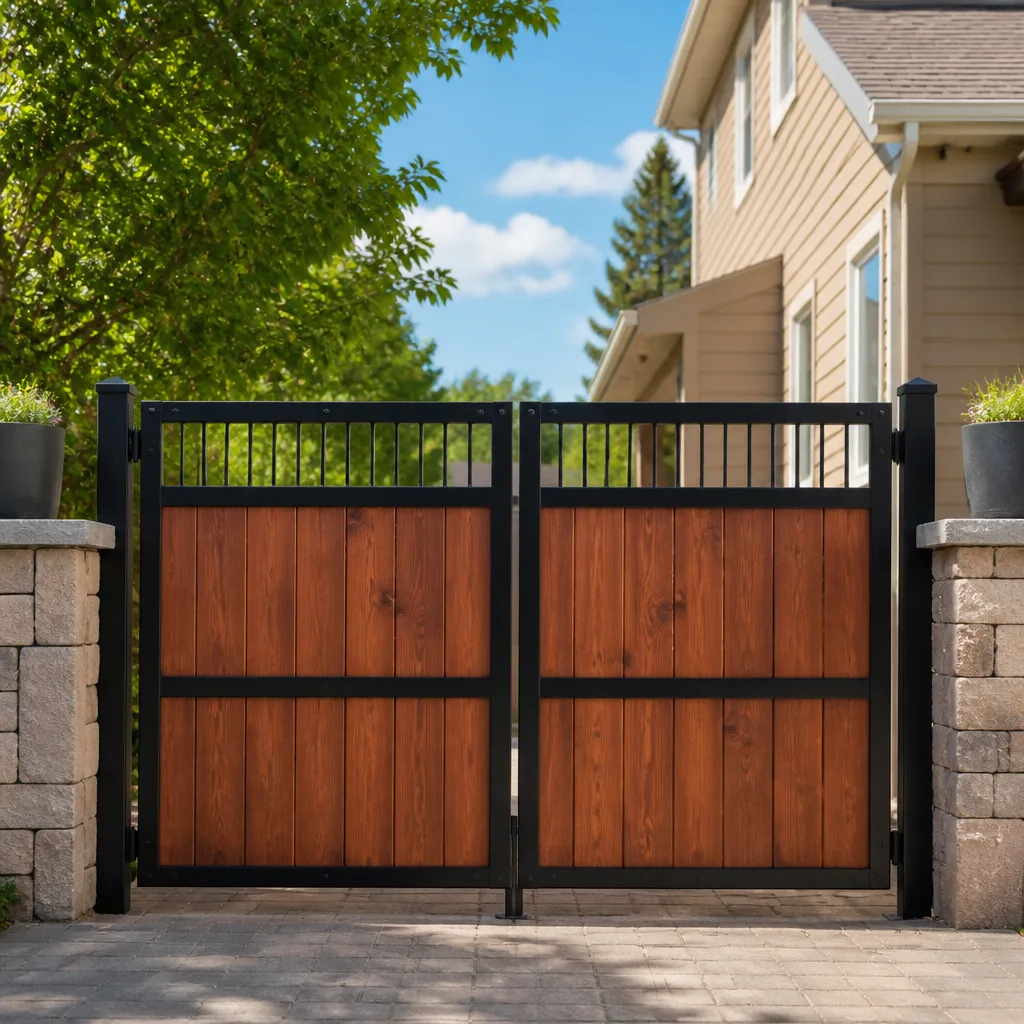 Wood & steel frame
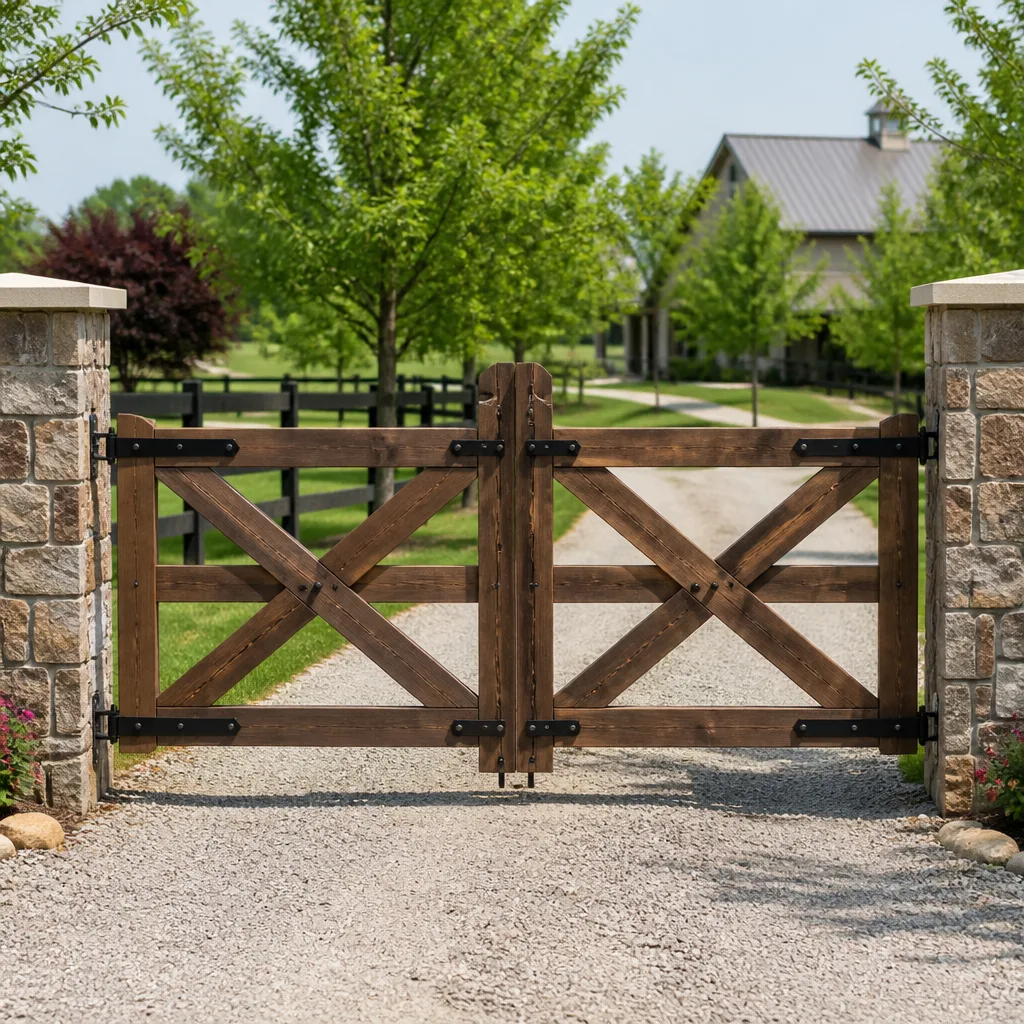 Farm & ranch
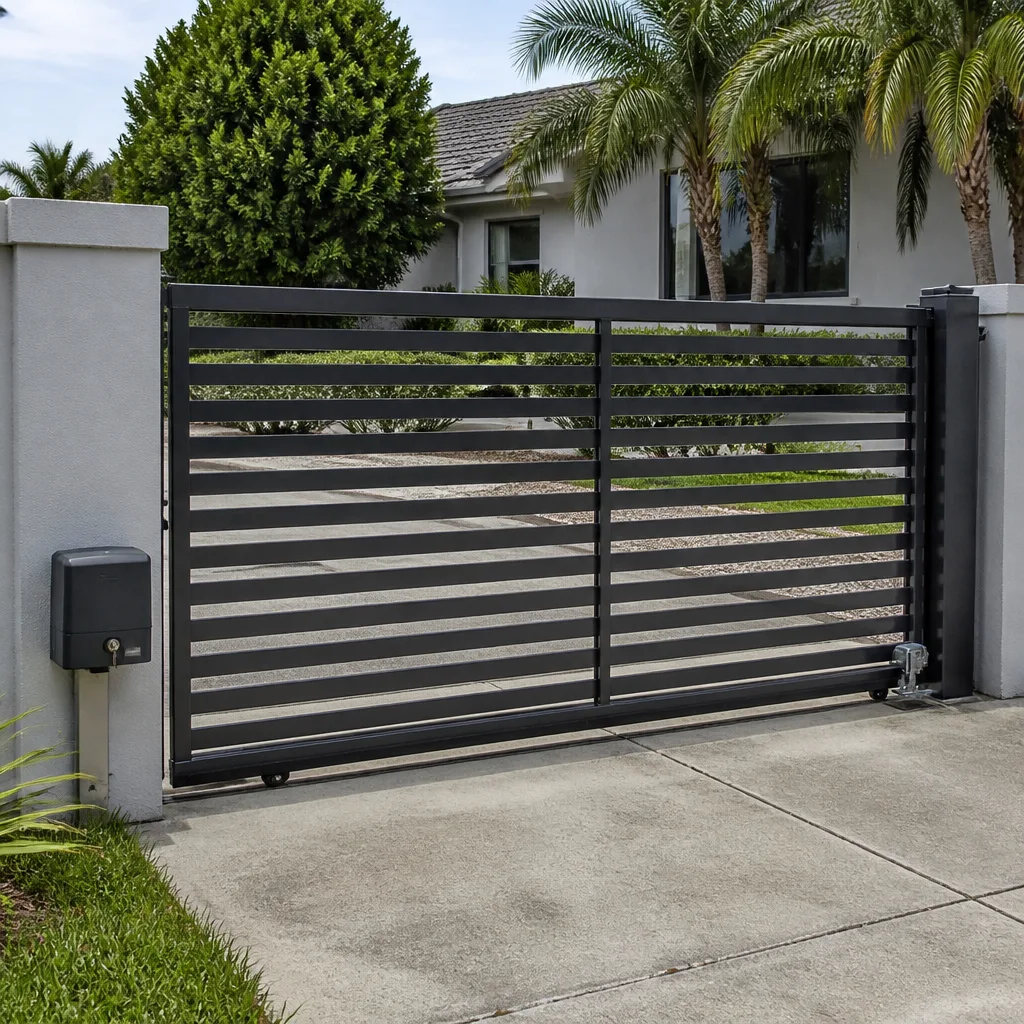 Sliding driveway gates
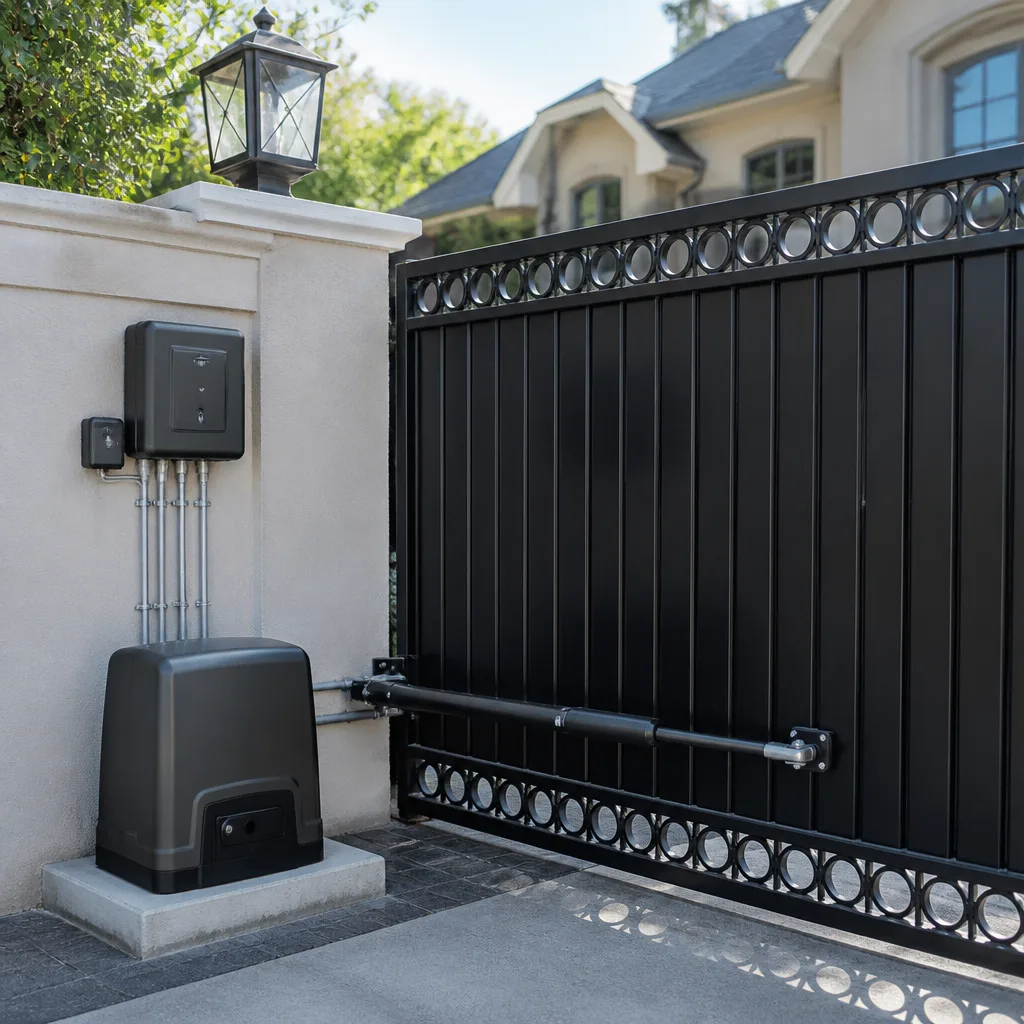 LiftMaster operators
Free on-site gate assessment - hinges, posts, and your LiftMaster or Nice gate operator checked before anything is quoted
The assessment is free and the quote is the invoice.
Get your free estimateDIY vs Professional Gate Repair: The Fort Myers Homeowner’s Decision Guide
A residential swing gate operator exerts roughly 400 to 600 pounds of linear force at the leading edge. That is enough to break an adult’s leg, crush a child against a post, or kill a pet. The UL 325 safety entrapment standard exists because people have died from gates that were “mostly working” after a handyman repair. This guide gives Fort Myers homeowners a clear framework for deciding which gate repairs are genuinely safe to attempt with basic tools, and which ones cross a line where the liability, the injury risk, and the cost of getting it wrong all point toward calling a gate specialist.
Quick Answer
Most gate repairs in Fort Myers fall into one of two categories: owner-serviceable maintenance (lubrication, remote reprogramming, hinge tightening, sensor realignment) and work that a homeowner should not attempt regardless of skill level (limit switch adjustment, control board replacement, post re-anchoring, motor force settings). The DIY-versus-professional decision is not about your mechanical ability. It is about whether the failure mode is cosmetic or dangerous. When the component you are about to touch controls how much force the gate exerts, how far it travels, or how it detects an obstruction, call a specialist. When the component just needs cleaning, tightening, or a fresh battery, you can handle it.
Styles & brands we work with
Table of Contents
- The Framework: Cosmetic Failures vs. Dangerous Failures
- Five Repairs Fort Myers Homeowners Can Safely Do Themselves
- The DIY Danger Zone: Four Repairs You Should Never Attempt
- How Fort Myers Weather Changes the DIY Calculus
- HOA Rules, Insurance, and the Paper Trail Nobody Thinks About
- The Real Cost of a Failed DIY Attempt
- What a Specialist Finds in 20 Minutes That DIY Misses
- A Simple Decision Tree for Any Gate Problem
The Framework: Cosmetic Failures vs. Dangerous Failures
Before touching anything, classify the problem. Every gate issue in Fort Myers fits into one of two buckets.
Cosmetic failures affect how the gate looks or sounds but not how safely it operates. A squealing hinge, a sagging picket, a faded operator housing, a remote that works only at close range. These fail gradually and give you weeks or months of notice. You can usually fix them with a socket set, a can of lithium grease, and patience.
Dangerous failures affect how the gate moves, stops, or senses. A gate that reverses at the wrong point, slams shut instead of stopping, drifts after the motor disengages, or ignores the safety beam. These failures often appear suddenly. And they are dangerous in a way that has nothing to do with your skill level, because the failure mode itself is an injury waiting for the wrong moment.
In our experience across Fort Myers neighborhoods, from McGregor Boulevard estates to gated communities off Daniels Parkway, the most common dangerous failure we see after a DIY attempt is a limit switch adjustment gone slightly wrong. The gate still opens. It still closes. But it now closes with twenty extra pounds of force at the last six inches. Nobody notices until something is in the way.
The rule is simple. If the component you are about to work on controls force, direction, speed, or obstruction detection, it is not a DIY job. Full stop.
Five Repairs Fort Myers Homeowners Can Safely Do Themselves
We are not gate-gatekeepers. There is real work you can do with basic tools, and doing it keeps your gate running longer between professional service calls. Here are the five safest owner-serviceable tasks.
- Hinge lubrication. Use a white lithium grease or silicone spray on gate hinges every four to six months. In Fort Myers, the salt air accelerates corrosion, especially within a few miles of the Caloosahatchee River or the Gulf. A lubricated hinge is quieter and reduces strain on the operator motor. If a hinge is so worn that lubrication does not quiet it, that is a repair call, not a lubrication problem.
- Remote control reprogramming. Most LiftMaster, Viking, and Ghost Controls remotes can be reprogrammed following the printed instructions or a model-specific video. If you have the original manual, this takes ten minutes. If you have lost the manual and are guessing at button sequences, stop. Guessing is how homeowners accidentally wipe all programmed remotes from the board.
- Photo eye or safety beam cleaning and alignment. Fort Myers rain, pollen, and lawn debris coat gate safety sensors quickly. A soft cloth and a gentle realignment so the two eyes face each other solves a large share of “gate won’t close” complaints. Do not adjust the mount bracket angle aggressively. A sensor that is clean, level, and paired will show a steady indicator light.
- Tightening visible hardware. Gate hinge bolts, operator mounting bolts, and post caps vibrate loose over time. A monthly walk-around with a socket set, snugging anything that has play, prevents small looseness from becoming a cracked hinge weld.
- Battery replacement in remotes and keypads. If the remote works at close range but not from the street, the battery is usually fading. This is a three-minute fix and costs a few dollars. If a fresh battery does not restore range, the issue is the receiver antenna or board, and that is a diagnostic call.
The common thread: these tasks do not change how the gate applies force. You are cleaning, tightening, or programming, not altering the mechanical or electrical behavior of the operator.
For a full walkthrough of what routine maintenance looks like on a gate that gets daily use, see our guide on Gate Repair in Fort Myers.
The DIY Danger Zone: Four Repairs You Should Never Attempt
This is where the DIY-versus-professional question is really decided. These four repairs are not “advanced DIY.” They are tasks where a mistake changes the safety profile of the gate, often without any visible sign that anything is wrong.
1. Limit switch adjustment. The limit switch tells the motor where to stop. Set it a quarter inch too far, and the gate now closes with the motor still driving hard against the post. That pressure is exactly what UL 325 force testing is designed to prevent. A homeowner cannot measure closing force without a force gauge. You can set the limit “correctly” by feel and still leave the gate dangerous. This is the single most common repair we re-do after DIY attempts in Fort Myers.
2. Control board replacement. Modern gate boards are not plug-and-play, even on straightforward brands like Elite and DoorKing. They require matching the board revision to the operator model, transferring settings, re-teaching travel limits, and often re-pairing safety devices. A board installed with the wrong DIP switch settings can leave the gate running at full speed with no obstruction reversal. Worse, some homeowners buy a “replacement board” online that is the wrong revision entirely, bricking the operator.
3. Post re-anchoring or foundation work. A leaning gate post in Fort Myers is often a symptom of sandy soil, water intrusion at the footer, or a post that was never set deep enough to begin with. Re-anchoring means digging out the footer, bracing the gate so it cannot swing, and re-setting concrete to cure properly. If the post shifts while the gate is hung, the gate can fall inward or outward with enough weight to kill someone. This is a multi-person job with real rigging, not a Saturday morning project.
4. Motor force or speed setting changes. Every operator made in the last two decades has adjustable force. Some also have adjustable speed. These settings exist so installers can tune the gate to meet UL 325 entrapment-force limits. If you increase force to fix a gate that stalls, you are not fixing the underlying problem, you are masking it by making the gate push harder. The day an obstruction is in the path, that increased force is what causes the injury. Force adjustments require a force gauge and a working knowledge of the current standard.
If you have an automated gate that is acting unpredictably, read our breakdown of common electrical failures in Electric Gate Repair in Fort Myers before touching the controls.
How Fort Myers Weather Changes the DIY Calculus
Fort Myers is not a neutral environment for gate hardware. Between the salt air, the summer lightning, and hurricane-season wind loading, components here fail in ways that a YouTube video filmed in Ohio will not cover.
Salt corrosion is the big one. Any community within five miles of the Caloosahatchee or the Gulf deals with accelerated oxidation on hinges, operator housings, and control board connections. A hinge that looks fine from the outside may be rusted internally. A control board that fails in the rainy season often has corrosion bridging across solder joints. When a homeowner replaces a corroded part but does not address the moisture path that caused the corrosion, the new part fails in six months.
Lightning and power surges are the second Fort Myers-specific killer. A nearby strike does not need to hit the gate directly. Induced surge through the power line or the keypad wiring can take out a control board or a receiver. After any storm, if the gate acts erratically but the mechanical parts look fine, suspect board-level surge damage. This is a diagnostic call, not a parts replacement guess.
Hurricane season changes the stakes too. A gate that is not properly secured can become a wind sail. We see homeowners after storms who removed the gate arm or chained the gate and then re-hung it without re-checking limit positions and force settings. The gate works, but it now closes with more force than it should. If you remove or secure your gate for a storm, have the operator re-verified before normal use resumes. For preparation tips, read our Gate Repair Emergency Preparedness Guide for Fort Myers Homes.
Homeowners considering a full replacement should understand how climate affects material choices. Our Gate Installation in Fort Myers page covers the difference between aluminum and steel in a salt-air environment.
HOA Rules, Insurance, and the Paper Trail Nobody Thinks About
Here is the part most DIY guides skip, and it matters more in Fort Myers than most places because of the density of gated communities and HOA-governed neighborhoods.
Most HOAs in Lee County have architectural control language that covers gates. If your gate is on a shared entrance, it is likely HOA-owned, and touching it without written approval is a violation of your governing documents. Even on a private driveway gate within a gated community, some HOAs require the gate to meet specific appearance or safety standards. A DIY repair that leaves the gate non-compliant can trigger a violation notice.
Insurance is where the risk gets quiet and expensive. Florida homeowners policies do not generally ask about gate maintenance at underwriting. But if someone is injured by your gate, the insurer’s adjuster will investigate. If the injury was caused by a repair the homeowner performed themselves, and that repair involved limit switches, force settings, or safety devices, the insurer has grounds to deny the liability claim on the basis of negligent self-repair. A professional repair with a dated invoice, a work description, and a company name creates a paper trail that shows the gate was maintained by a qualified party. That documentation matters after an incident.
When you hire a gate company, you get a record. When you fix it yourself and something goes wrong, you are the record. And that is not a position any Fort Myers homeowner wants to be in.
The Real Cost of a Failed DIY Attempt
The most common cost question we hear is “why pay a professional when I can buy the part online for eighty dollars?” The honest answer requires looking at what actually happens in a failed DIY sequence. For a detailed look at pricing, see our Gate Repair Cost Breakdown: The Fort Myers Homeowner’s Reference for 2026.
Here is a typical Fort Myers scenario we have seen more times than we can count. A homeowner’s gate starts stalling halfway open. They search forums, decide the capacitor is bad, and order a replacement for sixty dollars. It arrives in five days. They install it. The gate still stalls. They order a second part, a limit switch this time, forty dollars. The gate now opens fully but slams at the end of travel. They adjust the limit. The gate reverses erratically. Two weekends are gone. Three hours of troubleshooting per weekend. Then they call us.
The specialist arrives and diagnoses a worn drive belt that has been slipping. That is it. The belt is seventy-five dollars plus the service call. But the homeowner has already spent a hundred dollars on parts that were never the problem, plus two full weekends of frustration. And during those two weekends, the gate was operating with a misadjusted limit switch, which means it was operating unsafely, with the family using it every day.
The failed DIY attempt, in that common scenario, costs more than the professional call would have cost on day one. It also adds risk.
The economics change when you factor in the cost of doing it wrong twice. For most automated gate failures, the cost of one professional diagnostic visit is less than the cost of one wrong online part. This is not a case where DIY saves money on average. It is a case where DIY occasionally saves money when the problem is obvious and simple, and loses money when the problem is not obvious, which is most of them.
What a Specialist Finds in 20 Minutes That DIY Misses
There is a reason a gate specialist can diagnose in twenty minutes what a homeowner spends three hours researching. It is pattern recognition built across hundreds of gates, not intelligence. The specialist has seen the same failure mode on a Viking operator, a Ghost Controls unit, and a DoorKing board enough times to know the failure is rarely the part the forum community suspects.
Take a gate that opens but will not close. The homeowner’s research points to the safety photo eye. The specialist checks the eye, then checks the keypad wiring, then checks the loop detector. The actual problem is a failing relay on the control board that only acts up when the board gets warm, which is why the gate works in the morning and fails in the afternoon. That failure pattern is not something a homeowner can deduce from a single gate’s behavior. It is something a specialist recognizes because they have replaced that relay a hundred times.
There is also the matter of brand-specific quirks. A Ghost Controls residential operator stores travel limits in a different way than an Elite commercial operator. A DoorKing board revision from one year behaves differently than the same model number from a different year. A homeowner watching a general “gate won’t open” video is missing the brand revision context that determines the actual fix.
We are Courtyard Gate Repair, a gate-only shop, not a general contractor who also handles garage doors and fences. That narrow focus means our technicians have diagnosed more gate failures in a single month than a generalist sees in a year. The diagnosis is the part that creates the most value, and it is the part that is hardest to get right from a forum thread.
A Simple Decision Tree for Any Gate Problem
When your gate acts up, work through these questions in order. The answer tells you whether to reach for the socket set or the phone.
- Is the gate making noise but still moving normally? If yes, this is likely a lubrication or loose hardware issue. Safe to address yourself with basic tools.
- Is the remote or keypad not responding consistently? If yes, replace the battery first. If that does not fix it, call a specialist. Inconsistent response points to receiver or board issues.
- Is the gate stopping in the wrong position or reversing at the wrong time? If yes, call a specialist. This involves limit switches and force settings. Do not adjust these yourself.
- Is the gate physically leaning, sagging, or scraping the ground? If yes, call a specialist. Post and hinge problems can make the gate fall. This is a weight and rigging issue.
- Did the problem start after a storm or power surge? If yes, call a specialist. Storm-related failures usually live in the board, and they often mimic mechanical failures.
- Is the gate simply slow or sluggish but moving through its full range? This can be a failing capacitor, low hydraulic fluid, or binding hardware. It is a diagnostic call unless you already know the exact cause.
If you have answered these and still are not sure, the honest move is to call for an inspection. In Fort Myers, the cost of a diagnostic visit is usually less than the cost of the first wrong part.
Common Mistakes to Avoid
- Spraying WD-40 on gate hinges. WD-40 is a water displacer, not a long-term lubricant. It cleans the hinge and then dries out, leaving the metal unprotected against Fort Myers humidity. Use white lithium grease or a heavy silicone lubricant instead.
- Guessing at limit switch positions without a force gauge. The gate can look like it closes perfectly and still exceed the UL 325 force threshold. You cannot measure this by feel.
- Buying a replacement board from an online marketplace without verifying the board revision. Boards with the same model number can have different firmware and different terminal layouts. The wrong revision can damage the operator or leave safety features disabled.
- Ignoring a gate that is getting progressively slower. Slowness is an early warning sign of motor wear, capacitor failure, or binding hardware. The longer it runs in a compromised state, the more expensive the eventual repair.
- Removing a gate for hurricane prep and re-hanging it without re-verifying limits and force. The gate may work, but the operator’s settings were calibrated for the original installation. After the gate is re-hung, those settings need a check.
- Assuming all gates are mechanically simple. A manual gate and an automated gate are different machines. Once an operator is involved, the failure modes are electrical, control, and safety related, and they do not respond to torque alone.
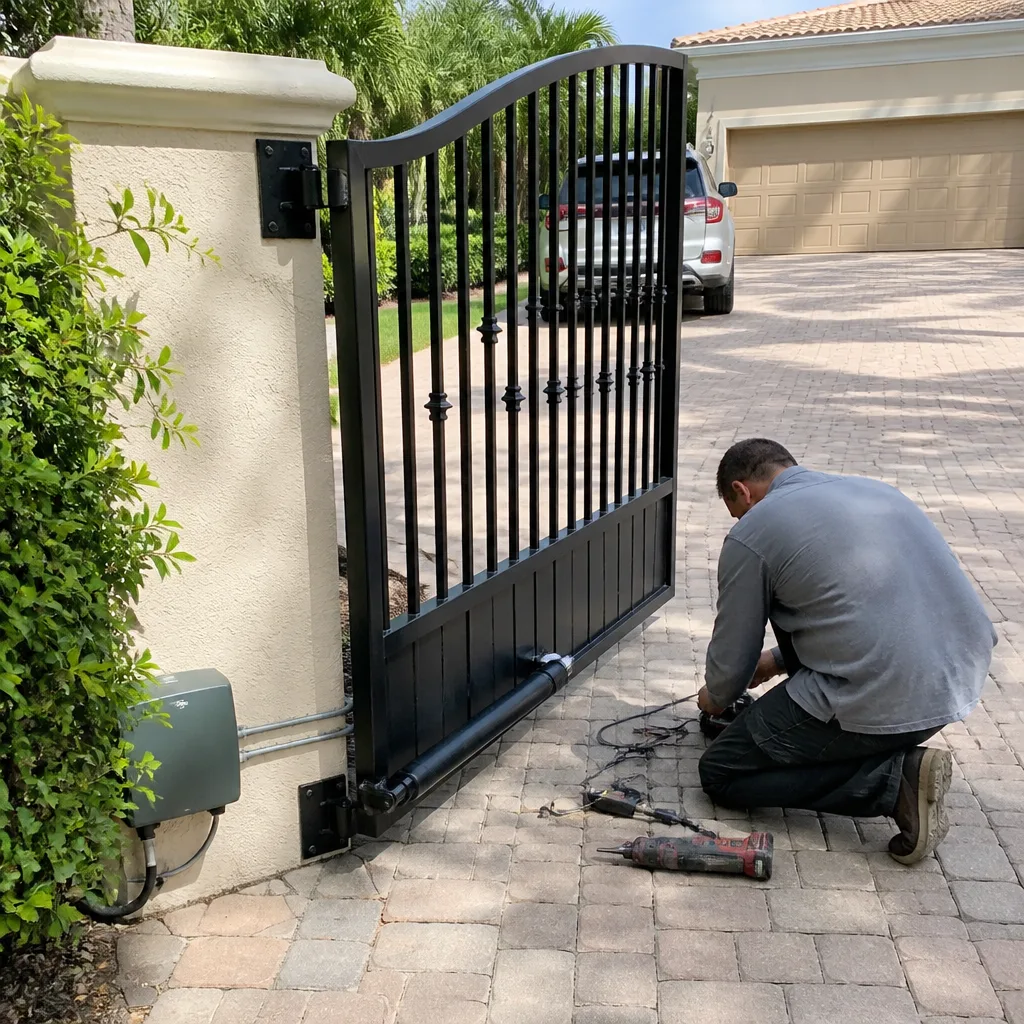
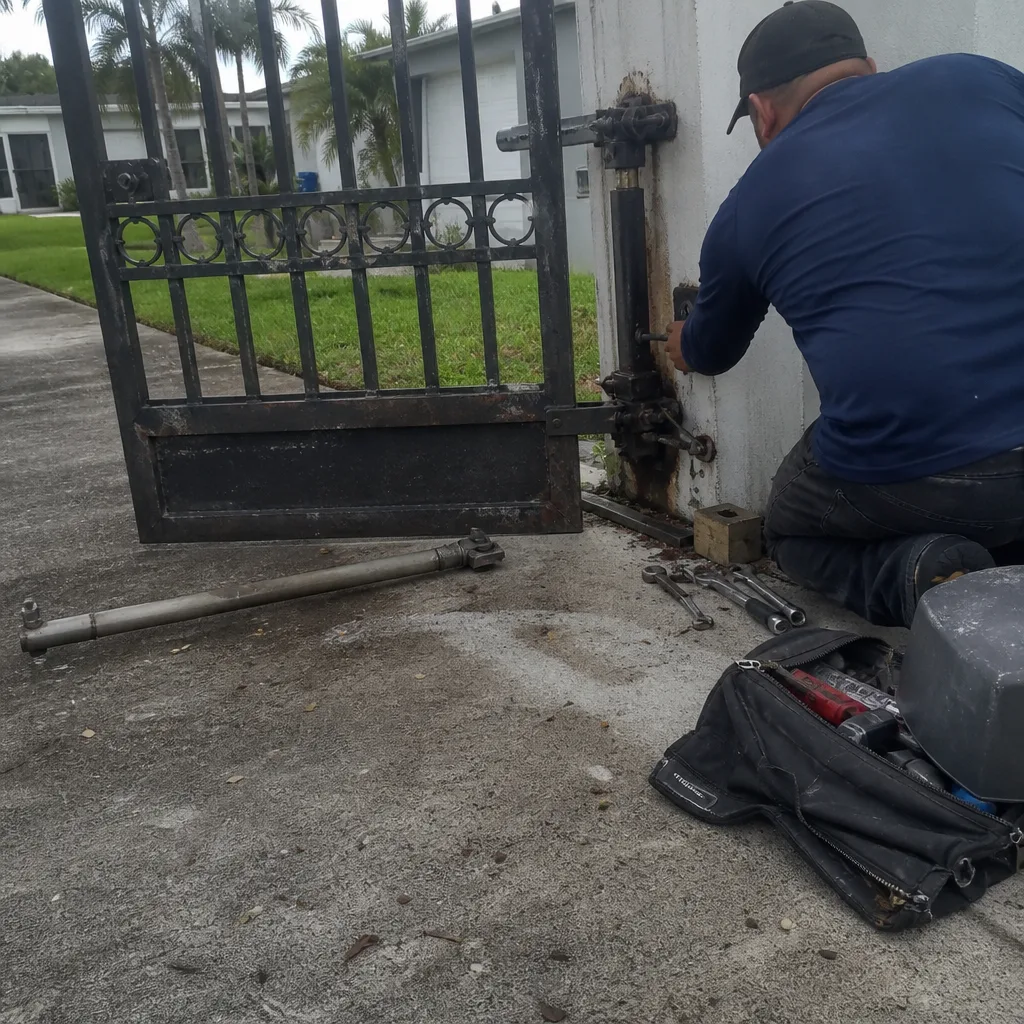
See the difference
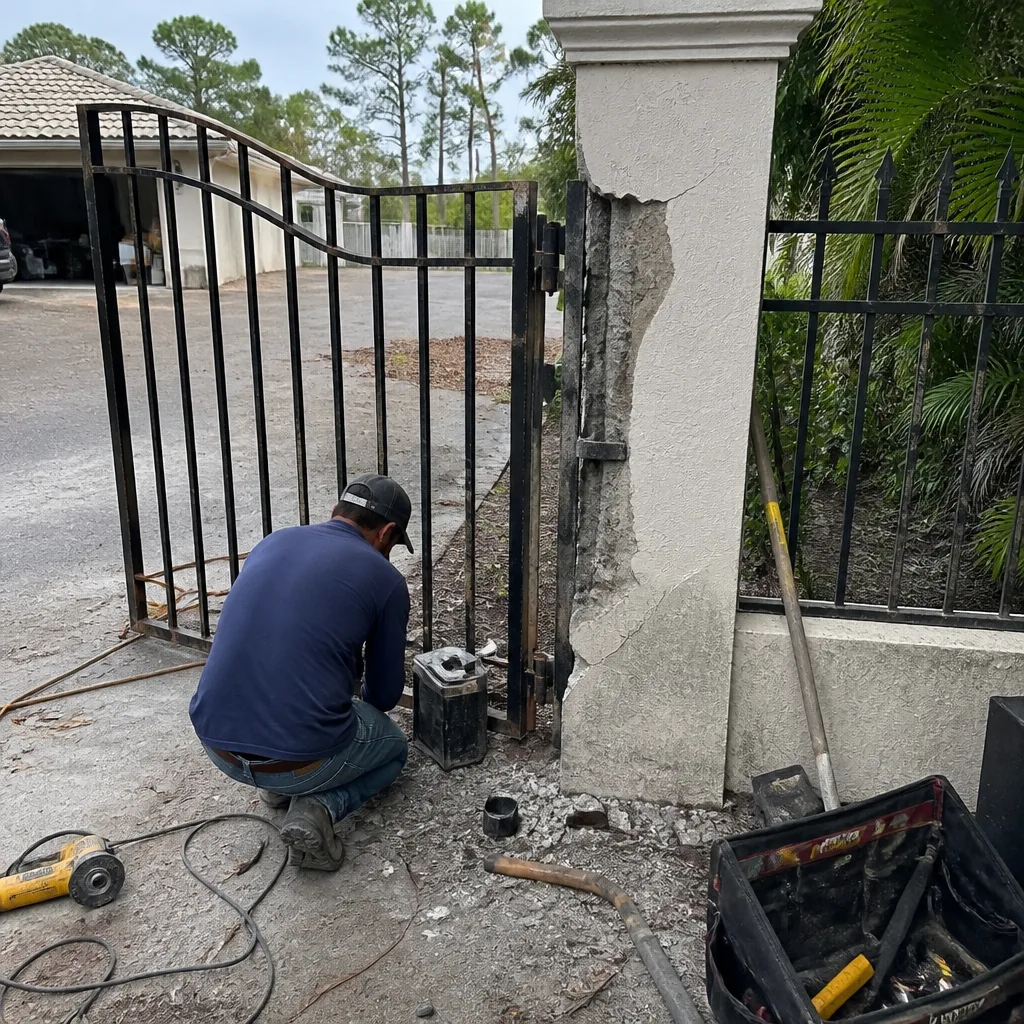 Before
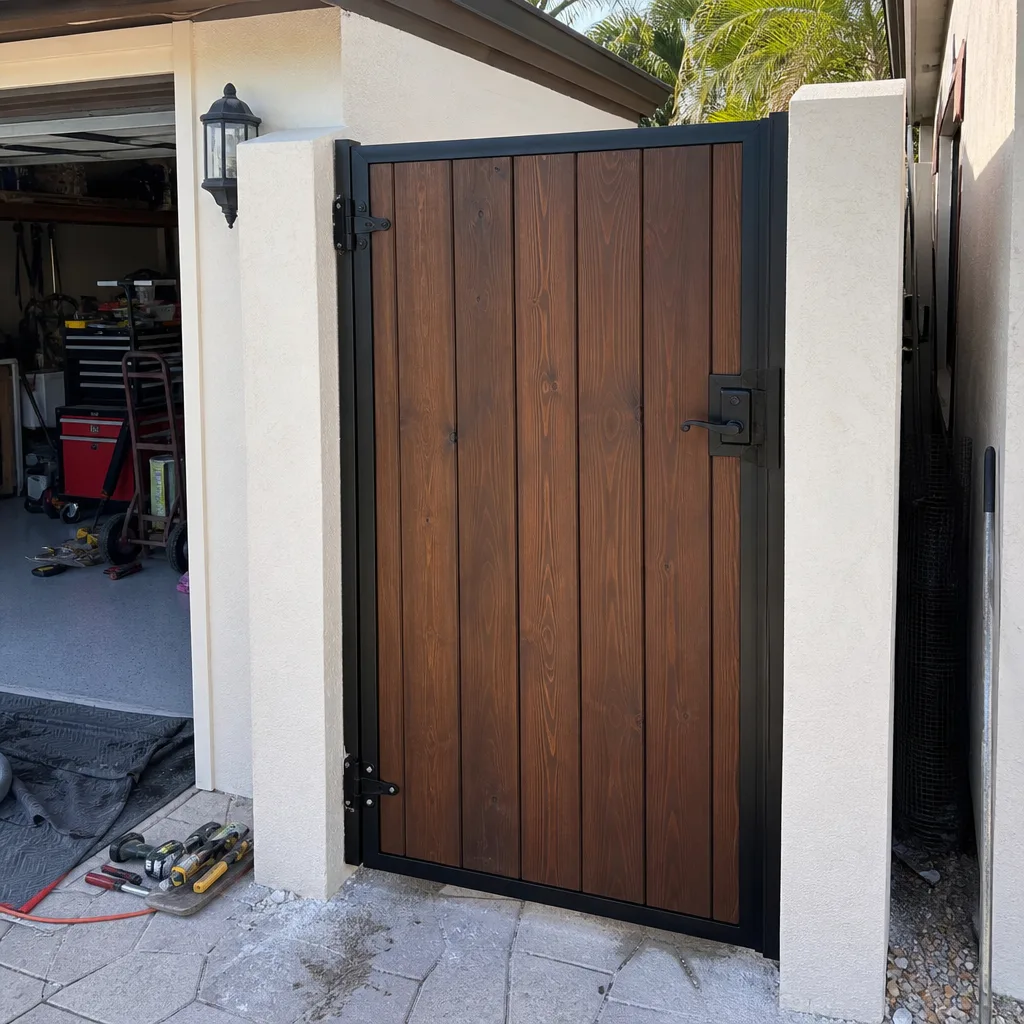 After
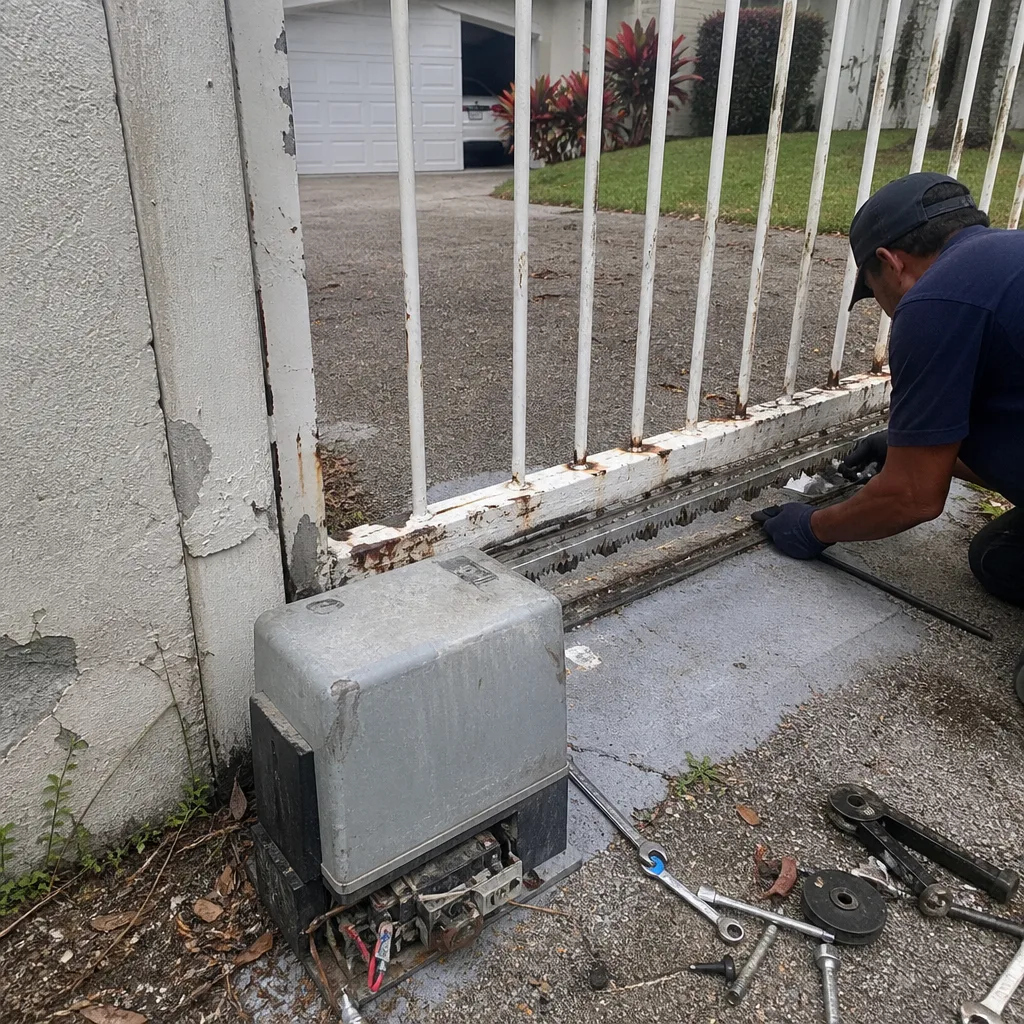 Before
 After
 Before
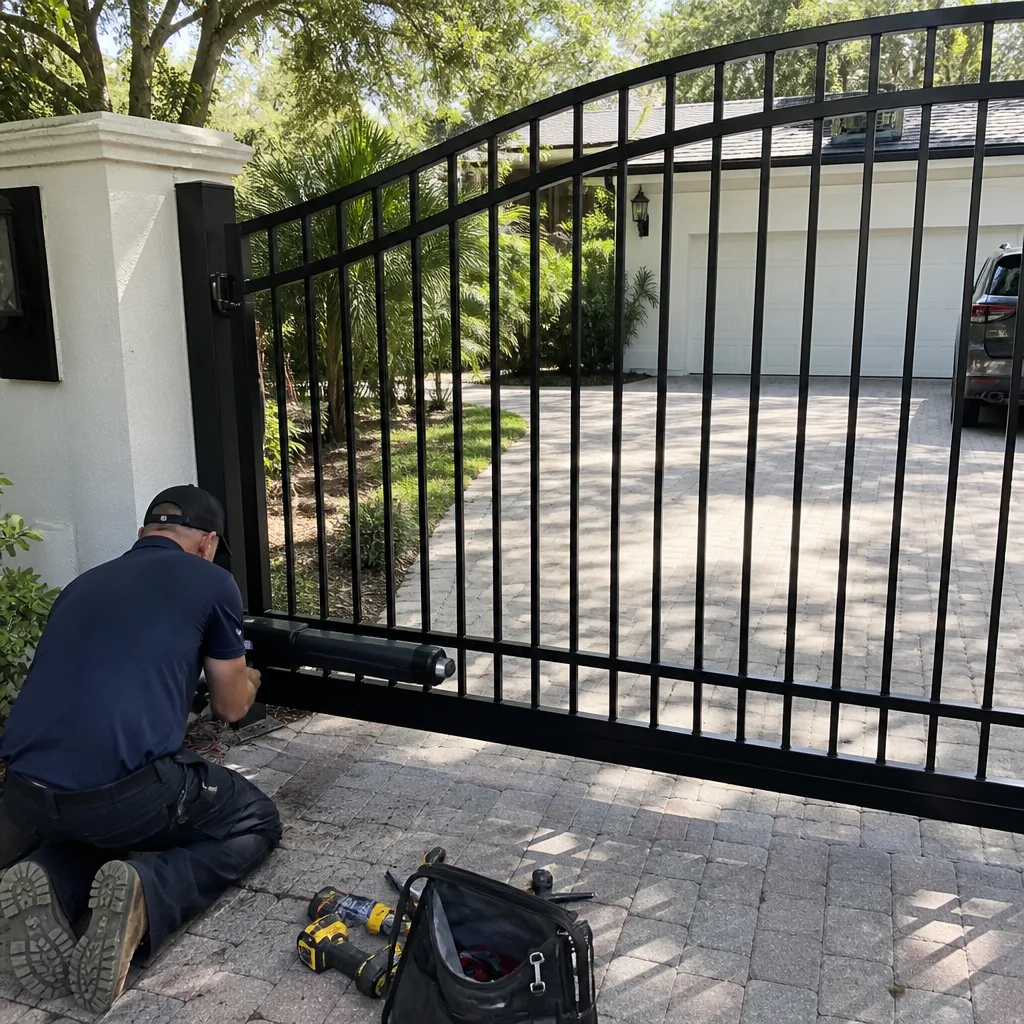 After
When to Call a Professional
Call when the gate stops in the wrong position. Call when it reverses unexpectedly or fails to reverse when blocked. Call when the post leans, the hinge weld cracks, or the gate scrapes the driveway. Call when the keypad works intermittently, when the remote range drops suddenly, or when the gate acts differently after a storm. These are not cosmetic problems, and none of them improve with guesswork.
Courtyard Gate Repair offers free estimates in Fort Myers. If you are unsure which category your gate problem falls into, call (844) 791-3898 and describe the symptom. We will help you triage it over the phone before you spend a dollar or touch a tool.
Frequently Asked Questions
Most residential gate repairs in Fort Myers fall between $150 and $600 depending on the component that failed. Simple diagnostics and minor parts like remotes or keypad batteries sit at the low end. Control board replacements, motor replacements, and post re-anchoring run higher. The diagnostic fee is usually applied toward the repair if you proceed. Call (844) 791-3898 for an exact estimate, estimates are free.
You can safely handle lubrication, remote battery replacement, hinge tightening, and sensor cleaning on your own. You should not attempt limit switch adjustment, control board work, motor force settings, or post re-anchoring regardless of your mechanical skill. Those repairs change how the gate applies force, and a mistake can leave the gate dangerous even when it appears to work normally.
The most common repair we see in Fort Myers is limit switch misadjustment, often after a homeowner or handyman has already worked on the gate. The second is control board failure, frequently caused by lightning surges during the summer storm season. Hinge wear from salt corrosion rounds out the top three, especially in communities near the river or the Gulf.
Most single-component repairs, like a limit switch adjustment or a sensor replacement, are completed within one to two hours on-site. Control board replacements can take longer if the board requires reprogramming or if multiple safety devices need re-teaching. Post re-anchoring and foundation work are multi-day jobs because the concrete must cure before the gate can be re-hung.
If your gate is part of a shared entrance or governed by HOA covenants, check your governing documents before any repair, including professional work. Many Lee County HOAs require approval for exterior modifications, and a gate repair that changes the appearance or the safety equipment can fall under that requirement. A professional gate company provides the documentation your HOA may request.
Secure the gate in the open or closed position, depending on your HOA and security needs, and disconnect power to the operator. If you remove the gate arms or chain the gate, re-verify the limit positions and force settings before resuming normal automatic operation after the storm. The operator was calibrated for the original gate position, and any change to how the gate is hung affects those settings. Call (844) 791-3898 for a re-verification visit, estimates are free.
The Bottom Line
The decision between DIY and professional gate repair in Fort Myers comes down to one question: does the component you are about to touch control force, travel, or obstruction detection? For more guides & resources, explore our blog. If the answer is no, you can handle it with basic tools and a little patience. If the answer is yes, the risk of serious injury, the liability exposure, and the probability of spending more money on wrong parts all point one direction. A gate specialist sees your exact failure mode repeatedly and can diagnose it in minutes. The phone call is cheaper than the first wrong part.
Written by the team at Courtyard Gate Repair, serving Fort Myers since 2017.