

Last updated October 30, 2026
 Wrought iron
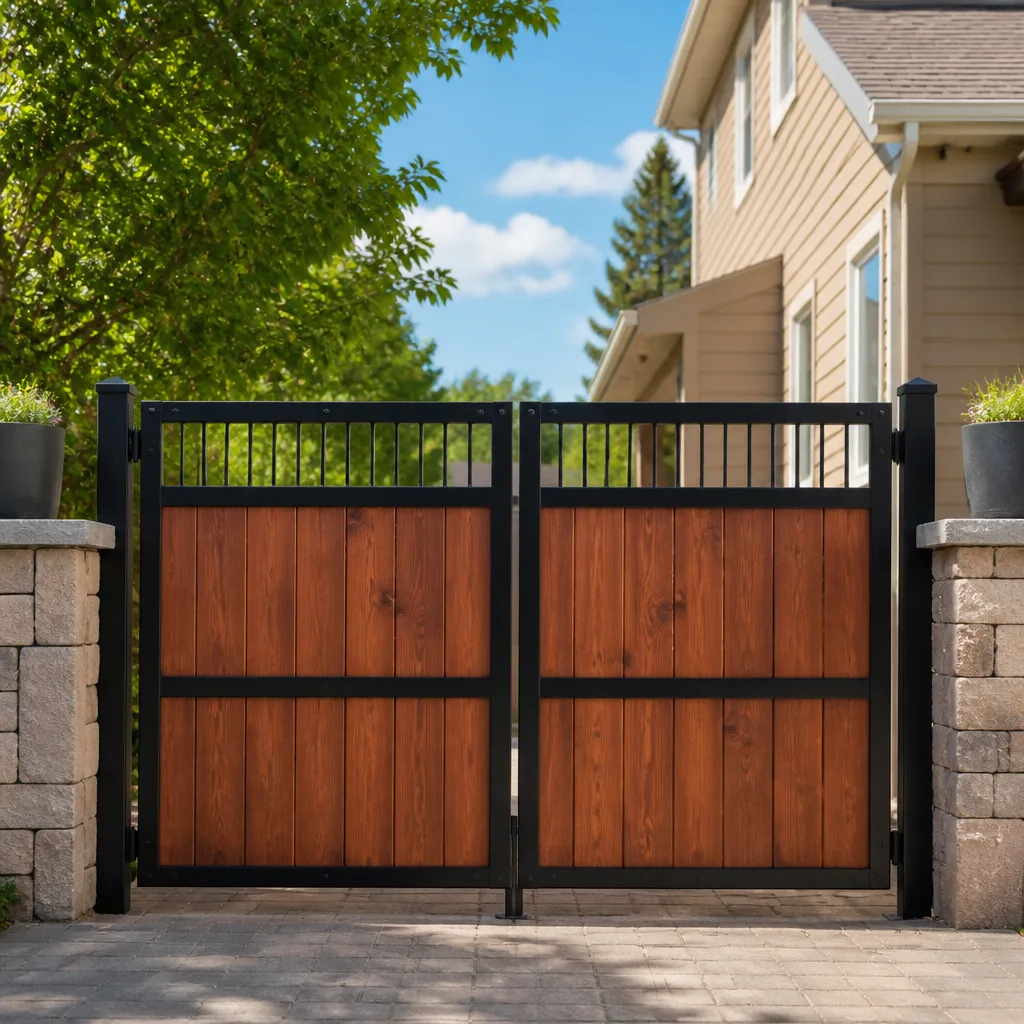 Wood & steel frame
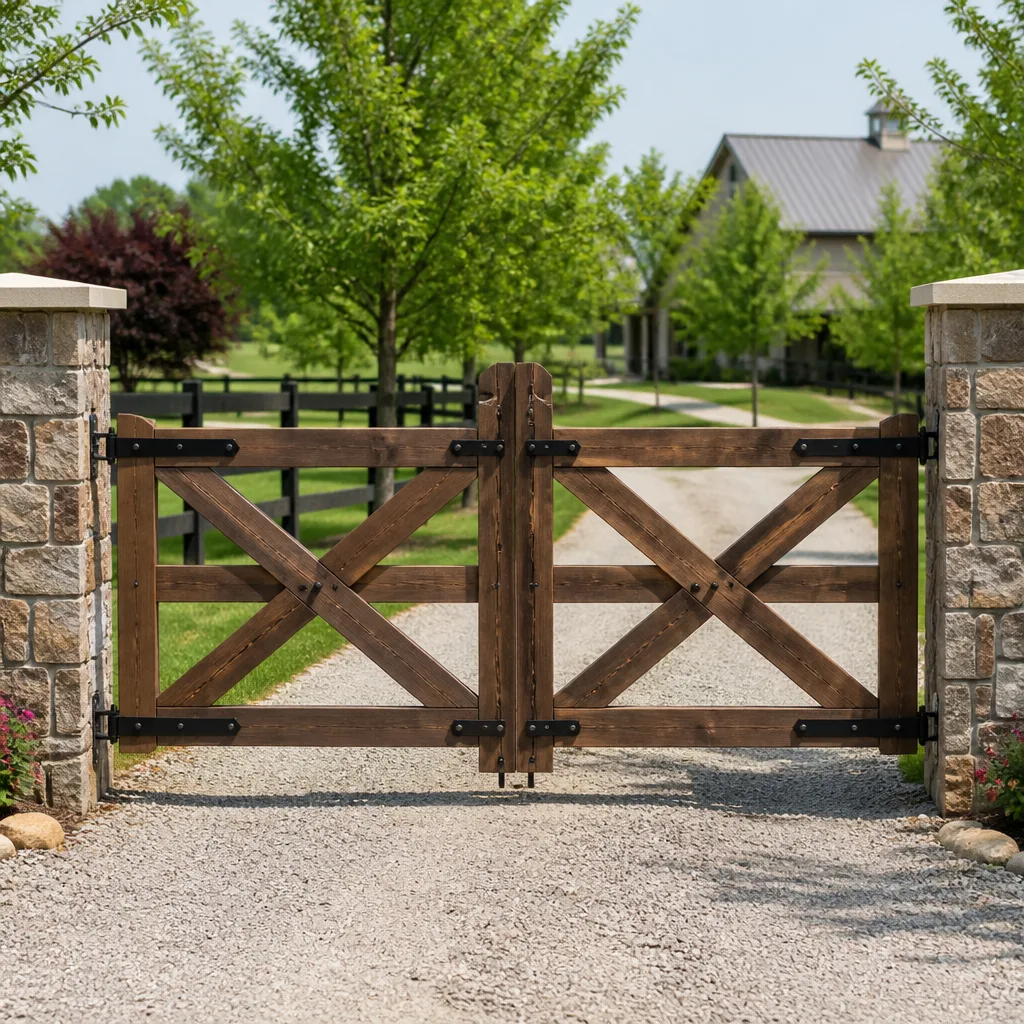 Farm & ranch
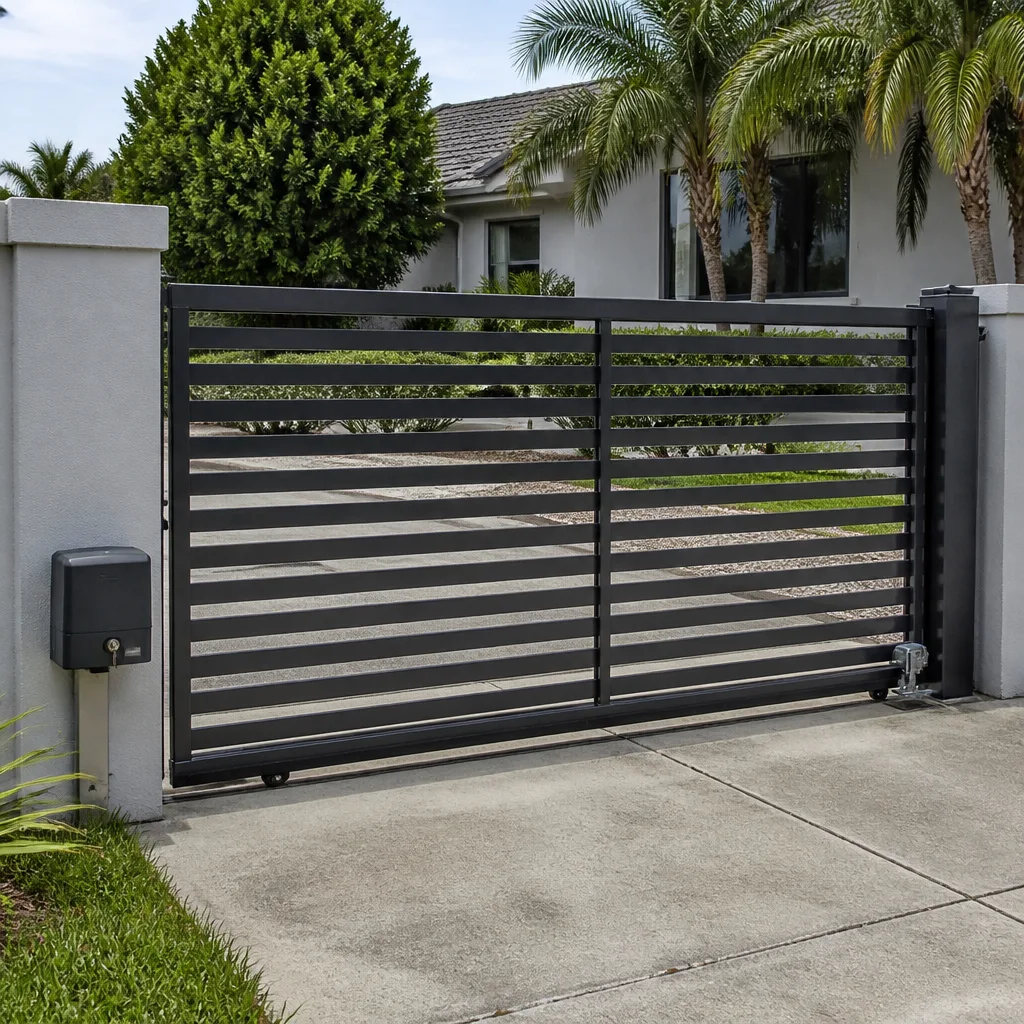 Sliding driveway gates
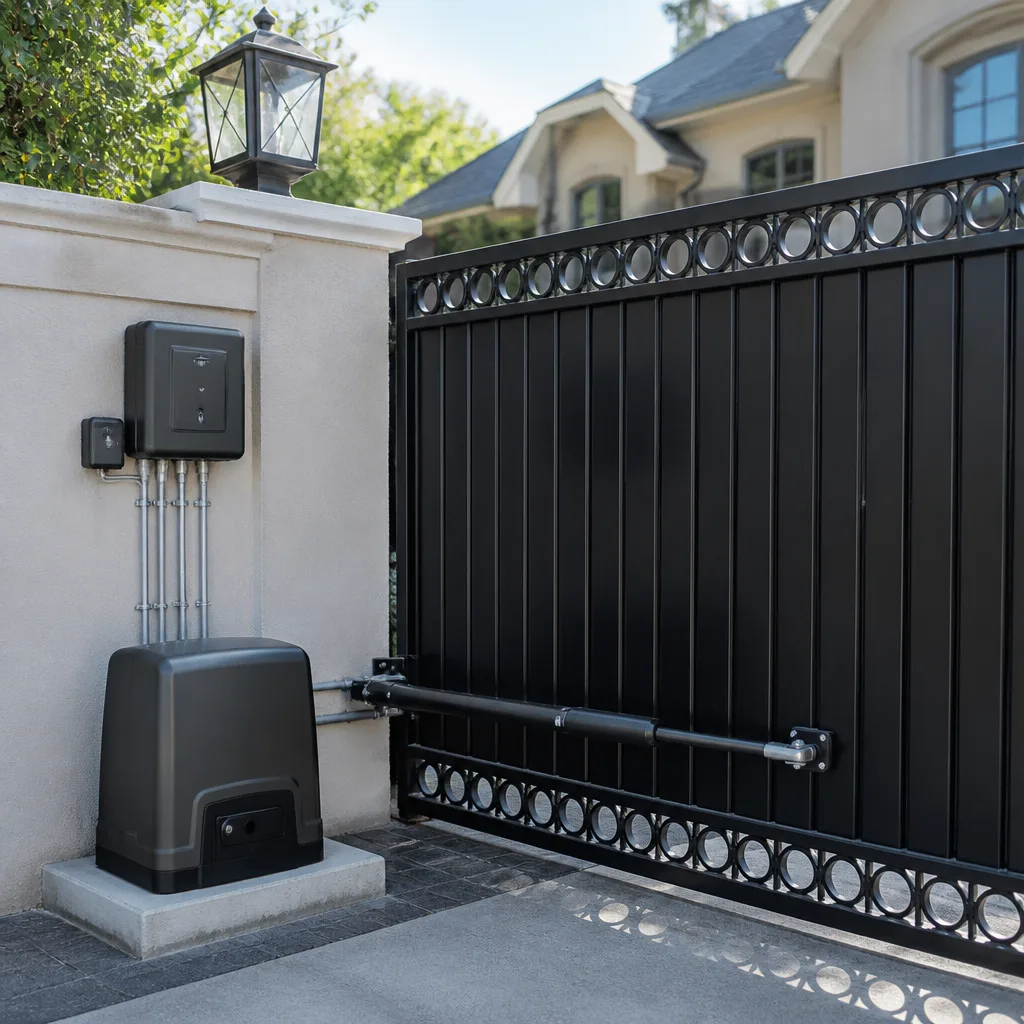 LiftMaster operators
Free on-site gate assessment - hinges, posts, and your LiftMaster or Nice gate operator checked before anything is quoted
The assessment is free and the quote is the invoice.
Get your free estimateGate Repair Permits, Codes & Inspections in FL: What You Need to Know
Most Fort Myers homeowners are surprised to learn that replacing a $1,800 gate operator after a storm is usually permit-exempt, while resetting the same operator on a new post can trigger a structural permit that costs $200 and takes two weeks. The line between repair and alteration in Florida building code is drawn in ways that don’t always match common sense, and that gap catches people every hurricane season. This guide walks through exactly where that line sits in Lee County and Fort Myers, what the UL 325 safety standard actually requires on automated systems, and how to handle the inspection process without losing an insurance claim or an HOA battle. For hands-on help, see our Gate Repair services.
Quick Answer
In Florida, most gate repairs – replacing operators, circuit boards, hinge hardware, or sensors – do not require a building permit. However, work classified as alteration – moving or replacing structural posts, changing gate dimensions, adding a new operator where none existed – does require a permit in Fort Myers and unincorporated Lee County. The UL 325 standard applies to every automated gate regardless of permit status, and non-compliant systems can create liability exposure even if the county never inspects them.
Styles & brands we work with
Table of Contents
- Florida’s Permit Threshold: Repair vs. Alteration vs. Replacement
- Lee County and Fort Myers-Specific Permit Requirements
- UL 325: The Safety Standard That Applies Even Without a Permit
- HOA Architectural Guidelines vs. Municipal Code in Fort Myers
- Hurricane Damage: When Insurance Repairs Require Permits
- What a Failed Inspection Means for Your Gate System
- Common Mistakes to Avoid
- When to Call a Professional
- Frequently Asked Questions
Florida’s Permit Threshold: Repair vs. Alteration vs. Replacement
Florida Building Code (FBC) Section 105.2 exempts certain work from permitting, and the operative word is repair. The code treats a repair as restoring something to its existing, previously approved condition. If your gate operator failed and you’re swapping in a new LiftMaster or FAAC board, that’s repair. If you’re replacing the entire swing arm mechanism because the old one seized, that’s still repair. Nothing about the structure or the system’s fundamental configuration changed.
An alteration is different. When you move a post, pour a new footer, widen the gate opening, or add an automated operator to a gate that was previously manual, you’ve changed the structure or the system’s footprint. That’s where the FBC requires a permit, and that’s where Fort Myers homeowners most often get tripped up.
Here’s how the thresholds break down in practice:
- Permit-exempt repairs: Replacing an operator motor or control board, swapping a limit switch, rewiring an existing keypad, replacing hinges and rollers, resetting a gate on its existing posts.
- Permit-exempt replacements: Swapping one automated operator for another on the same mounting position, replacing a gate leaf with an identical-size leaf on the same posts, installing a new keypad or loop detector.
- Permit-required alterations: Moving a post, pouring a new footing, changing the gate from single-leaf to double-leaf, adding a pedestrian gate where none existed, converting a manual gate to automated, replacing a wood post with steel or vice versa.
- Permit-required replacements: Replacing a gate leaf with a different size or material, changing the swing direction, relocating the operator to the opposite side of the opening.
The rule of thumb we tell Fort Myers customers: if the work touches concrete, changes the opening size, or adds a powered component for the first time, it’s a permit job. If you’re bolting a new BFT operator onto the same pad where the old one sat, it’s not.
A practical note on timing: Lee County’s building department currently processes most residential gate permits within 10-14 business days when the application is complete. For Gate Repair Warning Signs: A Fort Myers Homeowner’s Reference Guide, check our blog to catch issues before they require permits. That number shifts after major storms when permit volume spikes. If you’re planning an alteration in hurricane season, file early or expect delays.
Lee County and Fort Myers-Specific Permit Requirements
Fort Myers and unincorporated Lee County share the Florida Building Code as their baseline, but the two jurisdictions apply it slightly differently, and the differences matter for gate work. City of Fort Myers residents pull permits through the city’s Building Services Division. Unincorporated Lee County residents – including many areas with Fort Myers mailing addresses, like Gateway, Buckingham, and parts of Lehigh Acres – go through Lee County Community Development.
The practical distinctions for gate work:
- City of Fort Myers: Requires a permit for any structural alteration to a gate system, including post replacement, and for any new automated gate installation. Contractor work on automated systems requires the contractor to hold a valid license with Lee County. Homeowner-performed work on your own property is generally allowed, but the permit and inspection process still applies.
- Unincorporated Lee County: Follows FBC exemptions closely, but enforces an additional wrinkle: gates within a recorded easement or right-of-way require an additional encroachment review. If your gate sits on a recorded utility or drainage easement – common in newer communities – you may need sign-off from the county’s Right-of-Way division before the building permit can issue.
- Wind load requirements: Both jurisdictions enforce the FBC’s wind load provisions for gates in the High Velocity Hurricane Zone. For automated gates, the engineering package must include wind load calculations, which affects what materials and post depths are approvable.
One point that surprises people: an electric permit may be required separately from a building permit when a new automated operator needs a new power run. In Fort Myers, if an electrician must pull a new circuit to the gate, that’s an electrical permit from the same building department, often issued in parallel with the building permit. If the operator ties into an existing outdoor outlet, no separate electrical permit is usually needed.
For Fort Myers homeowners, the cleanest path is a permit application that includes both the scope of work description and photos of the existing gate. A well-documented application gets approved faster, and it protects you if an inspector questions whether the work was truly a repair.
UL 325: The Safety Standard That Applies Even Without a Permit
Here’s the part most homeowners never hear about until something goes wrong. UL 325 – the Standard for Safety for Door, Drapery, Gate, Louver, and Window Operators and Systems – governs every automated gate operator installed or operated in the United States, regardless of whether a permit was issued. In Florida, the FBC adopts UL 325 by reference, which means it carries the force of code even when the gate itself was technically a permit-exempt repair.
The standard was created after a series of child entrapment deaths involving automated gates. It requires that every automated gate have a primary entrapment protection device and, in most configurations, a secondary device, plus specific force and speed limits on the gate’s movement.
The requirements in plain terms:
- Entrapment protection: Every automated gate must have a primary safety device – typically an inherent motor current sensor that reverses the gate when it hits resistance – plus a secondary device like photoelectric eyes, an edge sensor, or a contact strip.
- Force limits: The gate’s closing force at the leading edge must not exceed a specific threshold, and the gate must reverse within two seconds of contact.
- Warning signage: Every automated gate must display hazards warnings at each exposure point – visible from both sides of the gate and at any pedestrian access point.
- Emergency release: The operator must have a readily accessible manual release so the gate can be opened without power during an emergency.
- Photoelectric sensor placement: Sensors must be positioned to detect a person or object across the full width of the gate opening, not just the center point.
Why this matters in Fort Myers specifically: many of our service calls start with a gate that was installed 15 or 20 years ago, before UL 325 was aggressively enforced, or by a handyman who didn’t know the standard. Our Gate Repair Troubleshooting: Common Problems and How to Fix Them covers how to identify these legacy systems. Those gates still work mechanically, but they’d fail a UL 325 compliance check in ways that can be genuinely dangerous. A Linear or Viking operator from the mid-2000s may lack the secondary entrapment protection that modern code expects.
We’ve seen this exact scenario in communities like Colonial Country Club and Whiskey Creek: a gate that was grandfathered when it was manual, converted to automated later without a permit, and now runs with no photoelectric eyes and no edge sensor. The homeowner doesn’t know it’s non-compliant until a visitor gets pinned against the gate, and then the liability question gets ugly. UL 325 compliance is not optional just because the county never inspected the gate.
HOA Architectural Guidelines vs. Municipal Code in Fort Myers
Gated communities in Fort Myers add a second regulatory layer that doesn’t always align with what the building department requires. An HOA’s architectural review board can impose standards that are stricter than city code – or, in some cases, standards that conflict with the engineering reality of a safe gate installation.
The most common conflicts we see:
- Appearance requirements that conflict with UL 325: Some HOAs require gates to be fully closed with no visibility gaps between vertical pickets. UL 325 and FBC accessibility provisions may require specific visibility or sensor placements that assume a gap or cutout. If the HOA demands a design that makes entrapment protection ineffective, you need a documented variance from the board.
- Post and footer restrictions: HOA landscape committees sometimes prohibit concrete pads or footings beyond a cosmetic depth because they want grass to grow right up to the gate. A proper post footing for a DFort Myers automated gate typically needs to be at least 30 to 36 inches deep, depending on the gate’s wind exposure. You can’t aesthetic your way out of physics.
- Approved-vendor lists: Many Fort Myers communities maintain a list of pre-approved gate contractors. If the vendor the HOA wants to use hasn’t worked on your brand – say, a BFT hydraulic system – you may have grounds to request a variance for a brand-certified specialist.
- Permit assumption: Some HOA boards assume their architectural approval substitutes for a county or city permit. It does not. Architectural approval is a community covenant enforcement mechanism; the permit is a legal building code requirement. You can have one without the other, and neither replaces the other.
If you’re in a community like Pelican Preserve, Renaissance, or Eagle Ridge, read your HOA’s governing documents before you schedule any gate work. The architectural review process usually takes 30 days, and it runs in parallel with, not instead of, the city or county permit process. Starting both on the same day is the fastest path.
Hurricane Damage: When Insurance Repairs Require Permits
Post-hurricane gate damage in Fort Myers creates the most confusing permit situations, because the scope of damage often straddles the repair-alteration line in ways that no pre-storm planning anticipated. And that ambiguity matters for insurance, because insurance adjusters look at the same classification question – repair versus replacement – from a coverage standpoint, not just a code standpoint.
Here’s what we tell Fort Myers homeowners after a storm:
- Operator damaged by surge or wind: If a storm-failed FAAC or LiftMaster operator is replaced with a new operator in the same location and the posts are intact, it’s a repair. No permit needed, and insurance treats it as a covered repair. Document the old operator and the new one with photos, including serial numbers.
- Post shifted or cracked: When a post moves even an inch out of plumb or shows structural cracking, you’re no longer repairing – you’re altering. The post must be extracted, a new footer poured, and the post reset. In the City of Fort Myers, that triggers a structural permit. Insurance companies will typically cover the replacement, but they may ask for the permit number when processing the claim.
- Gate leaf bent or deformed: If the replacement leaf matches the original’s dimensions and mounting, it’s a repair. If the leaf is rebuilt in a different material (wind-rated aluminum after a wooden leaf disintegrated, for example), the city may classify it as an alteration, requiring a permit.
- The post-storm gray zone: A gate that technically still works but has a measurable lean or a sagging leaf may be temporarily patched without a permit, but the underlying structural issue remains. Fort Myers inspectors do not consider a shimmed or wedged post a permanent repair, and insurance adjusters may deny a future claim if they determine the damage predated the current storm and was never properly corrected.
One more insurance-specific point that catches people: most Florida homeowner policies cover gate damage from hurricane wind and water, but they generally require that the work be performed by a licensed contractor when the claim exceeds the policy’s threshold for self-performed work. If you do a DIY post repair and submit a $6,000 claim, the adjuster may ask for the contractor’s license number. Without it, the claim can be reduced or denied.
And a timing reality after hurricanes like Ian and Helene: Fort Myers and Lee County permit offices run weeks behind. File the permit before you schedule the repair work, and ask your contractor to document everything photographically so the permit records match the insurance claim.
What a Failed Inspection Means for Your Gate System
A failed gate inspection usually isn’t about the gate falling down. It’s more often about missing documentation, a non-compliant safety device, or a discrepancy between the submitted plans and what was actually installed. Understanding what triggers a fail – and what it takes to correct it – demystifies the process.
The most common reasons Fort Myers gate inspections fail:
- No entrapment protection or the wrong type: The inspector sees an automated gate with the original motor current sensor only, no photoelectric eyes or edge sensor. The fix is retrofitting the required secondary device, which is a straightforward job for a specialist.
- Operator not listed: The installed operator – often a budget brand picked up at a retail store – isn’t on the plans or isn’t UL 325-listed for the gate’s class. The fix is swapping in a UL-listed operator from a manufacturer with a documented listing, which is where brand-agnostic knowledge helps: a Linear, Viking, or BFT unit may be a closer match to the gate’s cycle duty than whatever was originally proposed.
- Missing or incorrect signage: The UL 325 warning placards are either absent, faded, or mounted in the wrong location. This is the easiest fix and the most common lazy fail.
- Setback or easement issue: The gate was installed closer to the property line or over a recorded easement than the approved plans allowed. This can require moving the gate’s footprint, which is an alteration-level correction.
- Documentation mismatch: The permit application described one gate configuration and the contractor installed another. Even if the installed version is safe, the inspector can’t sign off against plans that don’t match. Amending the permit is usually possible but adds days.
Here’s the encouraging part: most failed inspections are correctable without full gate replacement. A non-compliant system can usually be brought into code by retrofitting missing safety devices, replacing the operator, or re-engineering a post. We’ve brought dozens of Fort Myers gates through re-inspection after failures, and the overwhelming majority needed adjustments, not demolition.
If you’re facing a failed inspection, get the inspector’s correction list in writing. That list is your scope of work. Work through it item by item, and schedule the re-inspection as soon as the corrections are complete. The re-inspection fee in Lee County is lower than the initial fee, and the timeline is generally faster.
Common Mistakes to Avoid
- Assuming all gate work is permit-exempt: Florida’s exemptions are broader than many states, but they’re not unlimited. Structural changes, new automated operators, and footprint changes trigger permits, and skipping them means a construction lien, a stop-work order, or an insurance fight later.
- Treating a re-set post as a repair: This is the single most expensive mistake we see in Fort Myers. A post that shifted in a storm is a structural alteration, not a cosmetic fix, and resetting it without a permit voids the wind load certification on the gate.
- Burying the permit conversation until after the HOA approves: HOA review and county permits are separate processes with separate timelines. Waiting for one before starting the other stretches a two-week process into two months.
- Buying a retail operator without checking UL 325 listing: Not every operator sold at big-box stores carries the UL 325 listing for the gate class and cycle duty you need. Installing an unlisted operator can fail an inspection even though the gate works.
- Skipping an inspection because the permit office said it wasn’t required: If you’re in a gray area and the department’s front desk gives you a verbal clearance, get it in writing. Verbal clearance does not protect you if an inspector or insurance adjuster later takes a different view.
- DIY-ing electrical work on an automated gate: Automated gate wiring in Florida is subject to the same electrical code as your house, and wet-location requirements in a coastal climate like Fort Myers are unforgiving. A bad splice in a junction box near a sprinkler head is a short waiting to happen.
- Paying a contractor before the inspection closes: In Lee County, the final inspection is the legal closeout of the permit. If you’ve paid in full and the inspection fails, your leverage to get corrections done is gone. Hold the final payment until the permit is closed.
When to Call a Professional
If your gate work involves a structural post, a new footing, a change in the gate’s footprint, or the addition of automation to a manual gate, this is not a DIY project. The wind load requirements in Fort Myers are real, and a gate that’s under-engineered for a Category 3 or 4 storm becomes a missile, not a barrier. Similarly, any time you’re touching the electrical side of an automated system, you want a licensed professional who understands wet-location wiring, UL 325 entrapment protection, and the specific quirks of your operator brand.
Courtyard Gate Repair offers free estimates in Fort Myers for all gate repair, electric gate repair, and new gate installation work. Call (844) 791-3898 and we’ll walk you through what your project needs from a permit, code, and inspection standpoint before you spend a dollar.
We work on LiftMaster, FAAC, BFT, Linear, Viking, Ghost Controls, DoorKing, Elite, and Mighty Mule systems, and we’d rather tell you the truth about your gate than sell you something you don’t need. Whether it’s a Gate Repair in Fort Myers or a full Gate Installation in Fort Myers, we’ll help you understand the permit picture first. For automated systems, see our Electric Gate Repair in Fort Myers page for specifics on operators and safety retrofits. You can also learn more about our approach on the Courtyard Gate Repair home page.
Frequently Asked Questions
In most cases, no. Replacing an operator, control board, sensor, hinge, or limit switch on an existing automated gate is classified as a repair under FBC Section 105.2 and is permit-exempt in Fort Myers and Lee County. If your repair involves moving a post, changing the gate’s size, or adding automation to a gate that was previously manual, you need a permit. Call (844) 791-3898 and we’ll tell you which side of the line your specific job falls on.
Gate-specific building permits in Fort Myers and Lee County are typically calculated on a valuation-based fee schedule, with most residential gate alterations falling in the $150 to $350 range for the permit itself, excluding any engineering or plans fees. The exact figure depends on the project’s declared value and whether an electrical permit is needed in parallel. For a precise number on your project, call (844) 791-3898 and we’ll help you estimate the total.
Replacing a storm-damaged operator is almost always permit-exempt as a repair, provided the posts are intact and the new operator mounts in the same location. If the storm damaged a post or footer, that structural work requires a permit, and insurance adjusters will likely ask for the permit number when processing the claim. Document the damage with photos before any work begins, and call (844) 791-3898 if you’re unsure how to classify the damage.
UL 325 is the federal safety standard for automated gate operators, requiring entrapment protection, force limits, warning signage, and an emergency release on every powered gate, regardless of whether the gate was permitted. It applies to your gate the moment it becomes automated, and non-compliant systems create liability exposure for the property owner. If your gate predates modern UL 325 enforcement, a safety retrofit is often a simple operator upgrade, not a full replacement.
HOAs can impose aesthetic restrictions, but those restrictions cannot supersede Florida Building Code or UL 325 safety requirements. When an HOA requirement makes a gate unsafe or non-compliant – such as demanding a solid gate face that blocks photoelectric sensors – the code standard wins, and you should request a written variance from the board.
Skipping a required permit can result in a stop-work order, a re-inspection fee that’s often double the original permit cost, and difficulty selling the property if unpermitted work is discovered during a title search. It can also void wind load certifications and complicate insurance claims if the gate later fails. The correction process is almost always more expensive than the original permit.
The Bottom Line
Gate permits in Florida come down to one question: are you repairing what’s already there, or are you changing its structure or function? Repairs are overwhelmingly permit-exempt. Alterations are not. The UL 325 safety standard applies either way, and it’s the part of the equation that most directly protects your family and your liability exposure. In Fort Myers, where hurricanes make structural damage a recurring fact of life, understanding the repair-alteration line before you start work saves you money, protects your insurance claim, and keeps your gate legal. When in doubt, get the classification in writing – and when the work needs a specialist, (844) 791-3898 is the number to call.
Written by the team at Courtyard Gate Repair, serving Fort Myers since 2017. Explore more guides & resources on our blog.
See the difference
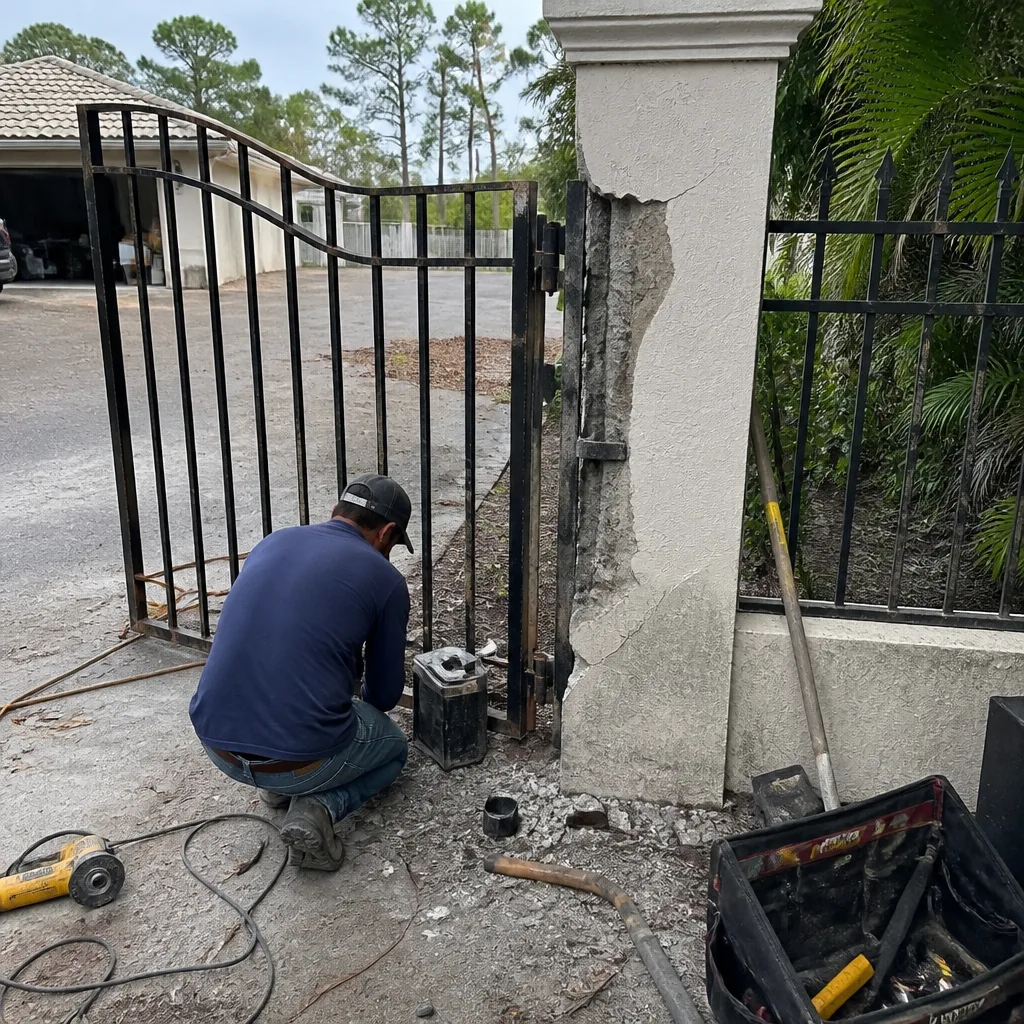 Before
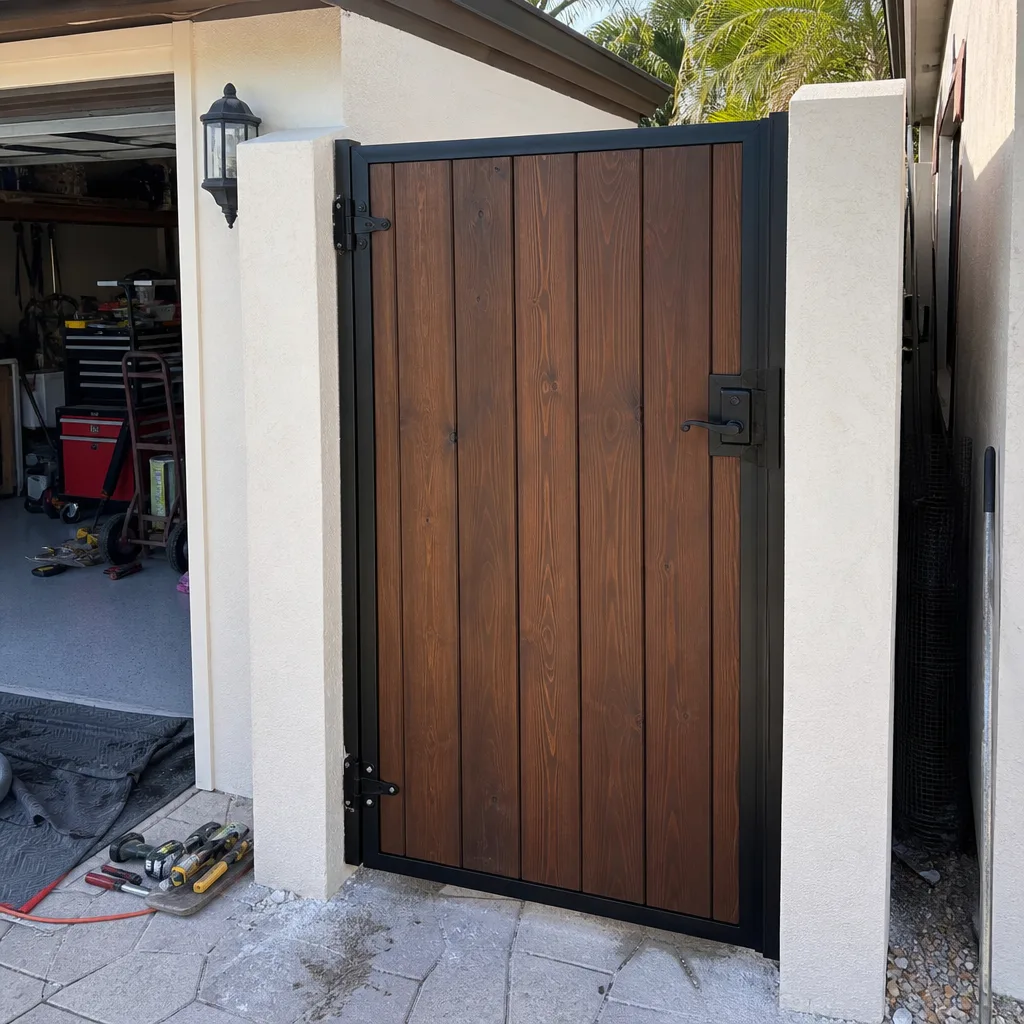 After
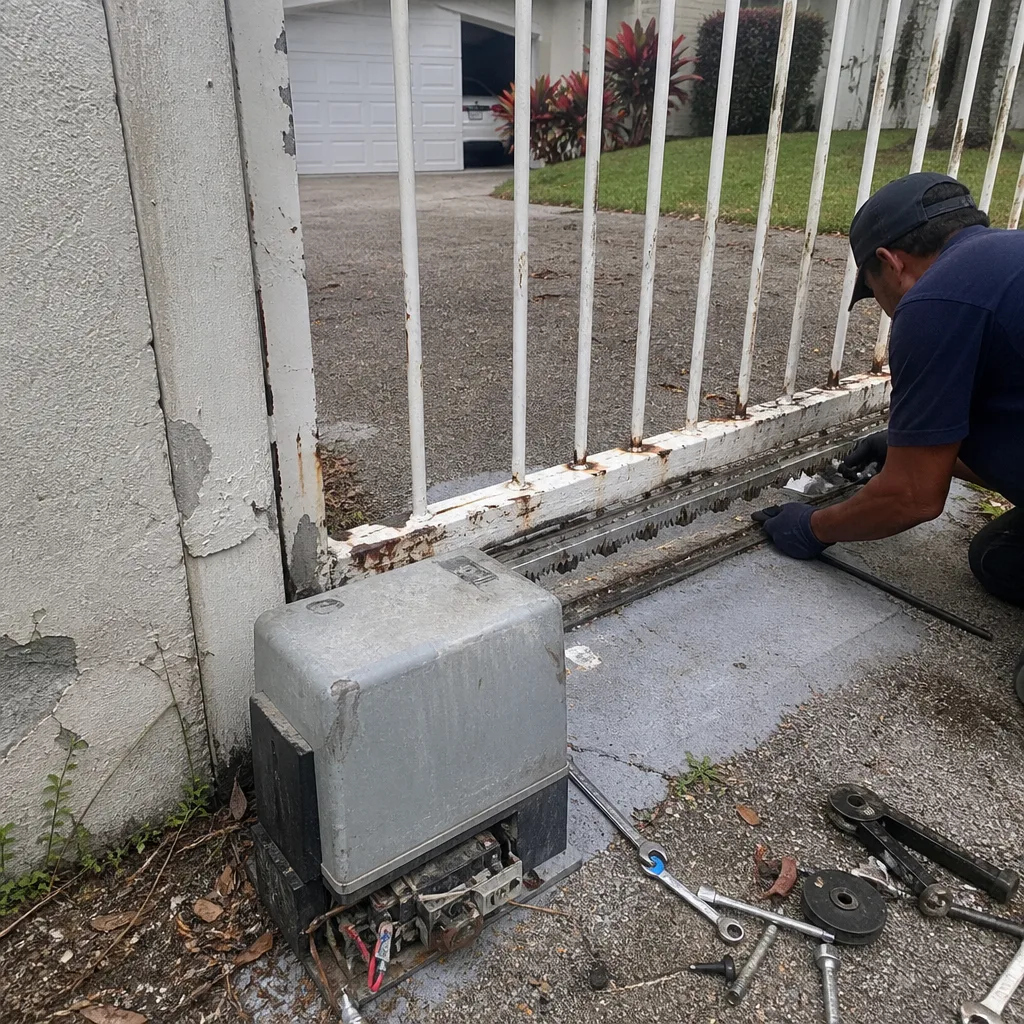 Before
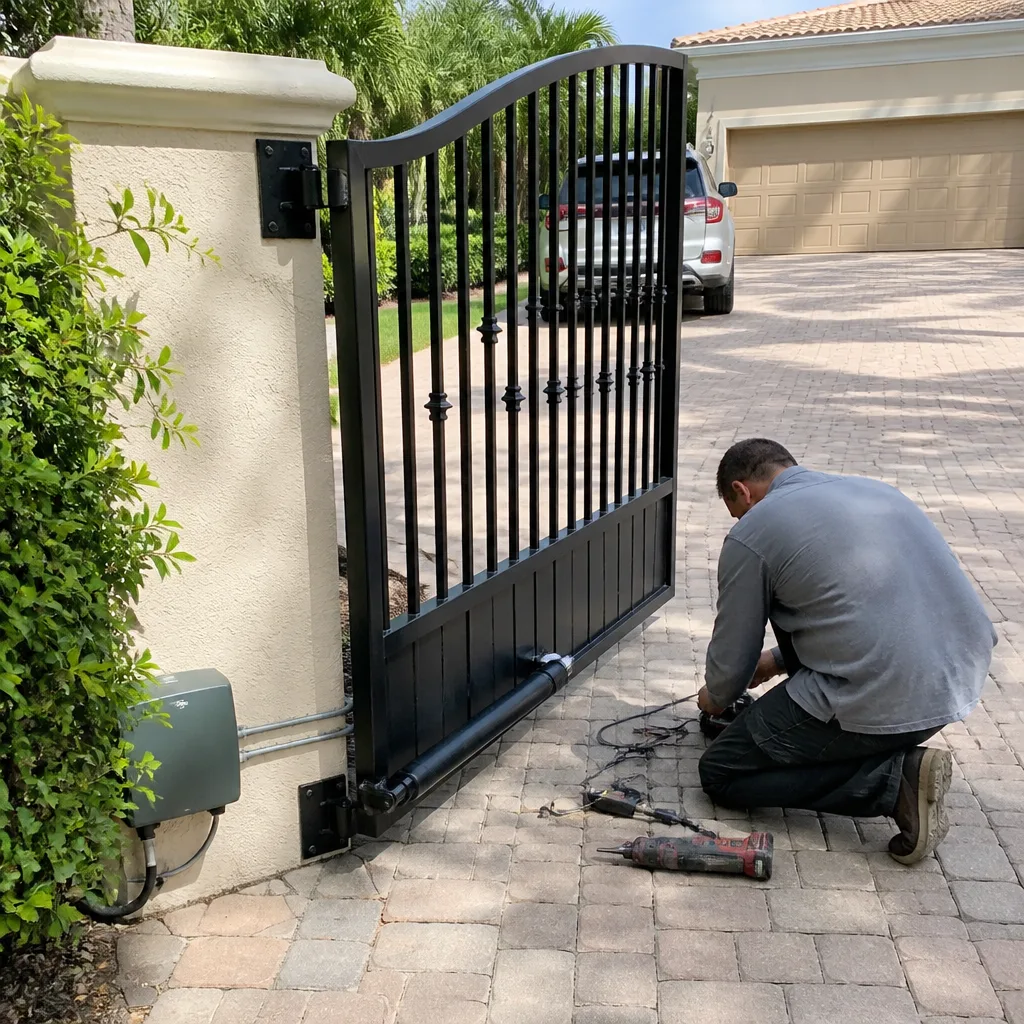 After
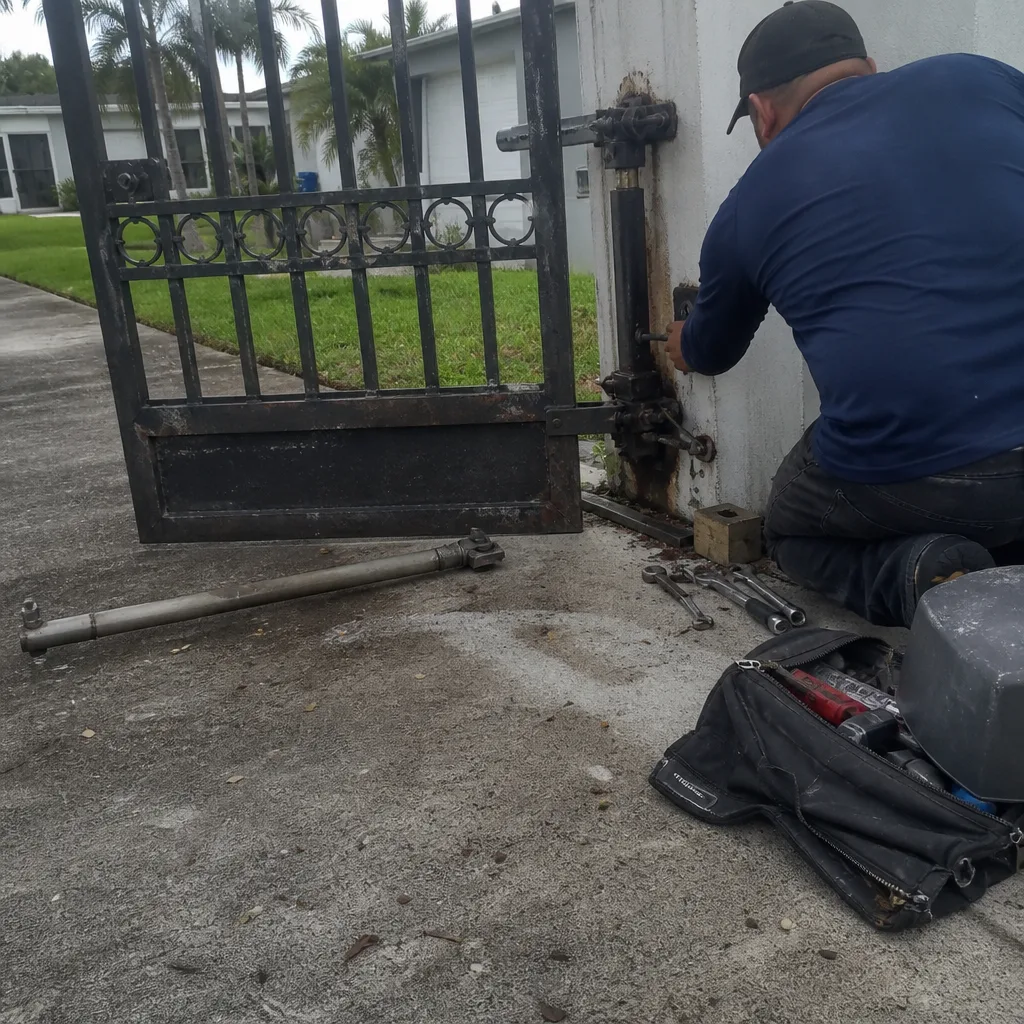 Before
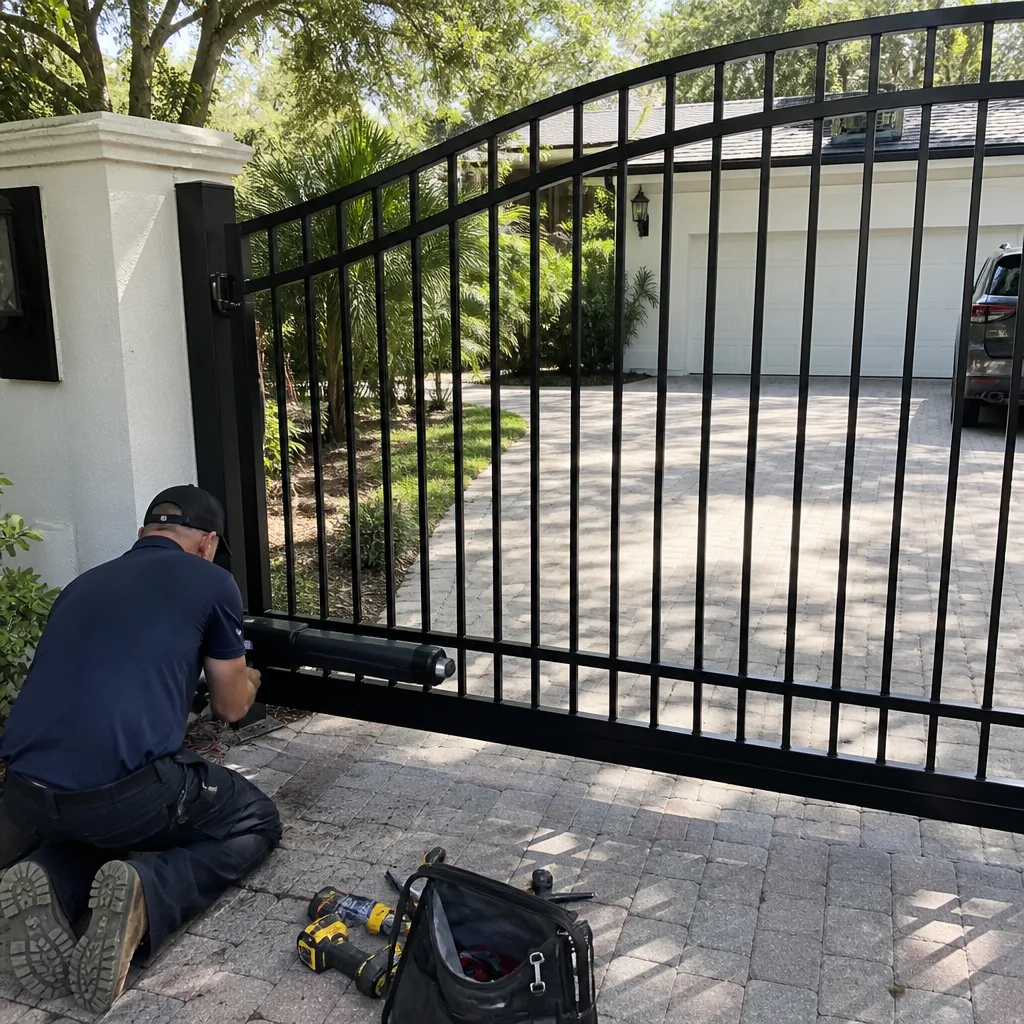 After